

The Kardashev Scale
When Scientists do Bullshit and Elon picks up on it


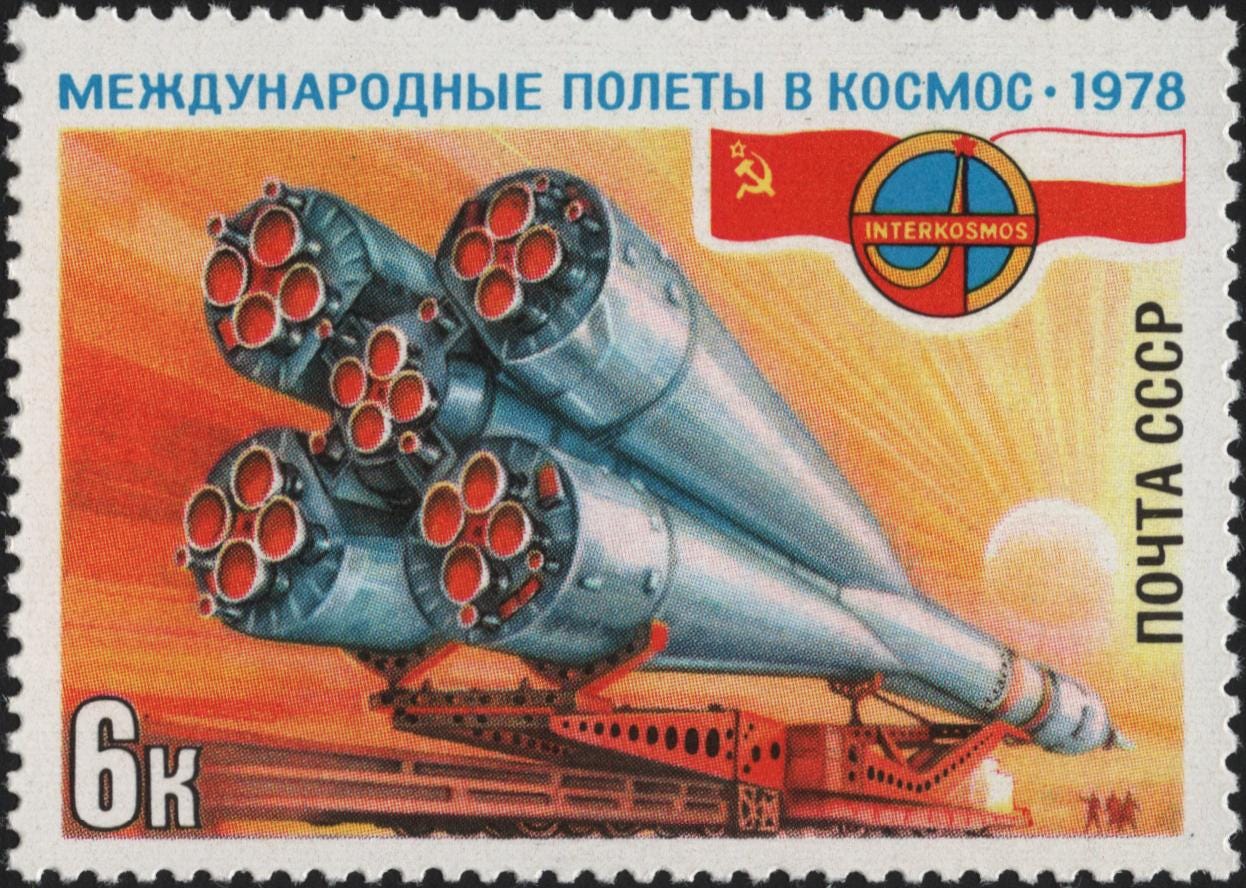
During the question and answer portion of the inaugural SpaceX earnings call, Gwyn Shotwell and Elon took a question from Morgan Stanley’s Adam Jonas.
Adam Jonas, Analyst, Morgan Stanley: Okay. Thanks, Elon. Gwyn, just a follow-up. You were recently asked what is one of the more underappreciated parts of the SpaceX investment story, you said robotics. Can you elaborate on why you believe that? How do robots fit into the SpaceX camp? Thanks, Gwyn.
Gwyn Shotwell, President and Chief Operating Officer, SpaceX: Let me try to put something together for you. I think what I might have said is underappreciating the amount of connectivity that we will need going forward. I think robotics, especially robotics tied to AI, like for autos and humanoid robot, will dramatically increase the demand for connectivity. Dramatically. Elon talked about that in his remarks.You can think of our satellites as being robots.
Gwyn Shotwell, President and Chief Operating Officer, SpaceX: Yes.
Elon Musk, CEO, SpaceX: They’re autonomous, and they do not need servicing. In the sort of what may seem the far future but will come faster than you think, using robots on the Moon to scale up manufacturing on the Moon, which I know it sounds like super sci-fi right now, but it’s going to happen, will enable us to build the mass accelerator on the Moon. If you have a mass accelerator on the Moon, and you have solar and radiator production on the Moon, you can I know this sounds totally nuts, but you can probably scale to 1,000 times the economy of Earth in terms of intelligence launched to space. Probably maybe even a million times. We are going to land a lot of tonnage on the Moon. We’re going to build the factories on the Moon. The robots will be helpful with that. It’s like, well, how much intelligence would you like as we grow towards being a Kardashev 2 scale civilization?
Our piece from Wednesday was about Elon’s tendency to wrap impossible lies in deeply serious-sounding language, so please refer back to that piece for how to interpret this answer from an Elon-Speak perspective. And don’t forget that Adam Jonas has been serving up softball, open-ended questions as fodder for Elon’s grandiose speculations for years now.
Today we’re need to talk about that Kardashev guy, and his scale.

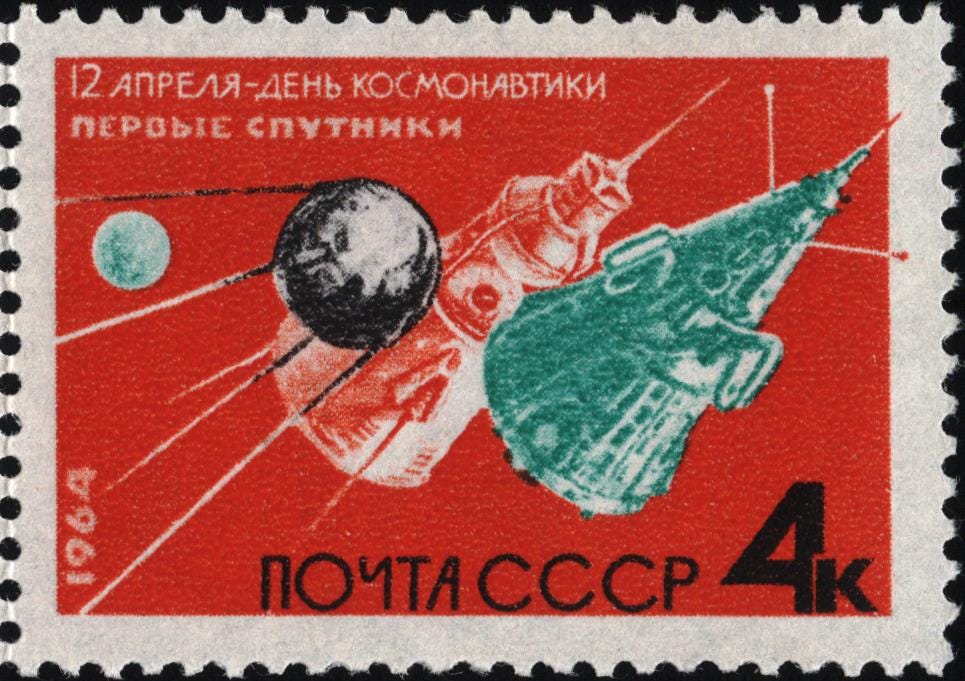
The Beginnings of SETI
Nikolai Kardashev graduated from the Astronomy Department of Moscow State University in 1955, where he attended radio astronomy lectures by the young Iosif Shklovsky, credited as the Soviet scientist who kickstarted the country’s Search for Extraterrestrial Intelligence (SETI) with his 1960 article “Is Communication with Intelligent Beings of Other Planets Possible?” In 1963, under Shklovsky’s supervision, Kardashev defended his dissertation, which included groundbreaking work on synchrotron radiation spectra of cosmic radio sources.
Kardashev introduced his three levels of civilization in a 1964 paper titled “Transmission of Information by Extraterrestrial Civilizations” presented at the first Soviet conference on the possibility of extraterrestrial civilizations, organized by Kardashev himself.
Kardashev measured the advancement of a civilization by energy consumption. A Type I civilization was one that can harness and use all the energy available on its home planet. In the paper he estimated global energy consumption at about 10^16 Watts1. A Type II civilization can harness the total energy output of its entire home star, around 10^26 watts, roughly the Sun’s total luminosity. Kardashev said this would be the stage of successful construction of a Dyson Sphere, a megastructure surrounding a star to capture its energy output. A Type III civilization can harness the energy of its own galaxy, around 10^36 watts.
Kardashev’s claim was that Level II or Level III civilizations would emit radio frequencies that researchers on Earth could theoretically receive. If alien civilizations existed, they’d be detectable by energy signatures “very close to the power of synchrotron radiation from nebulas formed in supernova explosions” rather than deliberate messages.
Kardashev held his conference partly as a Soviet response to the 1961 Green Bank Conference that took place in the US, where Frank Drake, an astrophysicist and at the time, radio astronomer working at the National Radio Astronomy Observatory (NRAO), introduced the Drake Equation:
The equation measures the Number of active, communicative extraterrestrial civilizations in the Milky Way Galaxy as a function of: R∗ the average rate of star formation; fp = the fraction of those stars that have planets; ne the average number of planets that can potentially support life per star that has planets; fl the fraction of planets that could support life that actually develop life at some point; fi = the fraction of planets with life that go on to develop intelligent life; fc = the fraction of civilizations that develop a technology that releases detectable signs of their existence into space; L = the length of time for which such civilizations release detectable signals into space.
Anyone thinking that’s an unwieldy list including several things that no one could hope to estimate with any level of accuracy would be right. The absurdity of sleuthing around for aliens on the basis of a scientific wild-ass guess wasn’t lost on the organizers of the Green Bank Conference. The attendees had the good sense to keep it all under wraps, and they met in secret.
But, none of it stayed a secret for very long, and right soon SETI was widely accepted as a serious pursuit.
As early as 1966, Carl Sagan helped revise and expand Shklovsky’s 1962 book on extraterrestrial life, publishing it here as Intelligent Life in the Universe.
It was the book that lunched Sagan’s publishing career.
Sagan made his own contribution in his 1973 book The Cosmic Connection, where he revised the Kardashev system using decimals to give the classification more refinement and a sliding scale. A Type 1.0 civilization uses 10^16 watts of power, a Type 1.1 uses 10^17 watts, and so on. Type 2.0 would be 10^26 W and Type 3.0 = 10^36 W, keeping Kardashev’s original ratios. Sagan classified Earth in 1973, using 10¹³ W of consumption, as Type 0.7.
The “Kardashev Scale” has since become part of the very infrastructure of science-fantasy.

The Fantasy Part
The scale only considers power use and no other facet of development. A civilization that wastes energy blowing things up would be rated identically to one that channels the same power into energy-efficient computation like “AI” (/s). Raw wattage tells us nothing about intelligence, sophistication, or what a civilization actually does with the energy. The whole idea is deeply rooted in a Soviet-style industrial-growth-as-measure-of-power paradigm.
The scale's core assumption that civilizations just keep consuming exponentially more energy forever also has zero empirical foundation. It sounds good. It’s a mathy way to express that Soviet-style growth model. Carl Sagan even stepped in to make it extra mathy by providing the all-important illusion of precision. But, it is still mathiness on top of arbitrary assumptions pretending to be science.
The framework also treats energy consumption as freely scalable. If humanity is to get to Level I, we’d need 1,000 times the energy use to get there according to Sagan, but how exactly would we do that? A one thousand-fold increase in the amount of energy the planet currently consumes would require advances akin to cold fusion and 100% efficient solar panels.
Even if we or some other civilization were able to generate a planet’s worth of power, we can’t know that it wouldn’t destabilize the climate, collapse ecosystems, and generate waste heat at levels that could render the planet in question uninhabitable.
The scale also assumes that advanced civilizations would expand outward to consume more energy at ever-larger physical scales. Cosmologist John D. Barrow counter-argued that real technological progress trends toward manipulating increasingly smaller dimensions, as with nanotechnology.
To correct the misperception, Dr. Barrow developed his own scale, The Barrow Scale.
Given the obvious shortcomings and the speculative nature of whole idea, it’s hard to imagine anyone would take it seriously. But, for decades, actual astronomers have spent valuable time and money searching the Milky Way for evidence of Dyson Spheres.
They haven’t found one yet.
SpaceX Dreams
When Elon spouts off and SpaceX writes in it’s S-1 things like the following:
We believe the next paradigm shift for humanity is the creation of a resilient, perpetually expanding spacefaring civilization that drives continuous innovation across new frontiers, ultimately propelling us to Kardashev Type II status—a civilization that harnesses the full energy output of our Sun.
it’s just classic Elonism. Elonology. Elonosis.
As Tesla was dedicated to “accelerating the world's transition to a sustainable future,” so here Elon must summon the grandest vision possible for SpaceX. It matters not that it makes no sense or that few take it seriously. What matters is that it sounds cool and comes straight out of the future that was the future when Elon was young, and that’s all that counts.
Next time he mentions it, do remember it’s not science, it’s bullshit. Born of science, but still bullshit.
If you appreciate our work and want to provide some support without committing to a regular subscription, please visit the tip jar below and spot us a cup of coffee! Every little bit counts and is much appreciated!

Thanks for reading! Enjoy your day, get outdoors, help a neighbor, be kind to someone less fortunate, scratch a friendly dog’s jowls, and always remember, rich or poor, good or bad, we will all one day be equal.
Kardashev’s original estimates were measured differently, were lower than what is presented here, and now generally considered to be wrong. These are more “modern, revised” estimates closer to Sagan’s determinations.